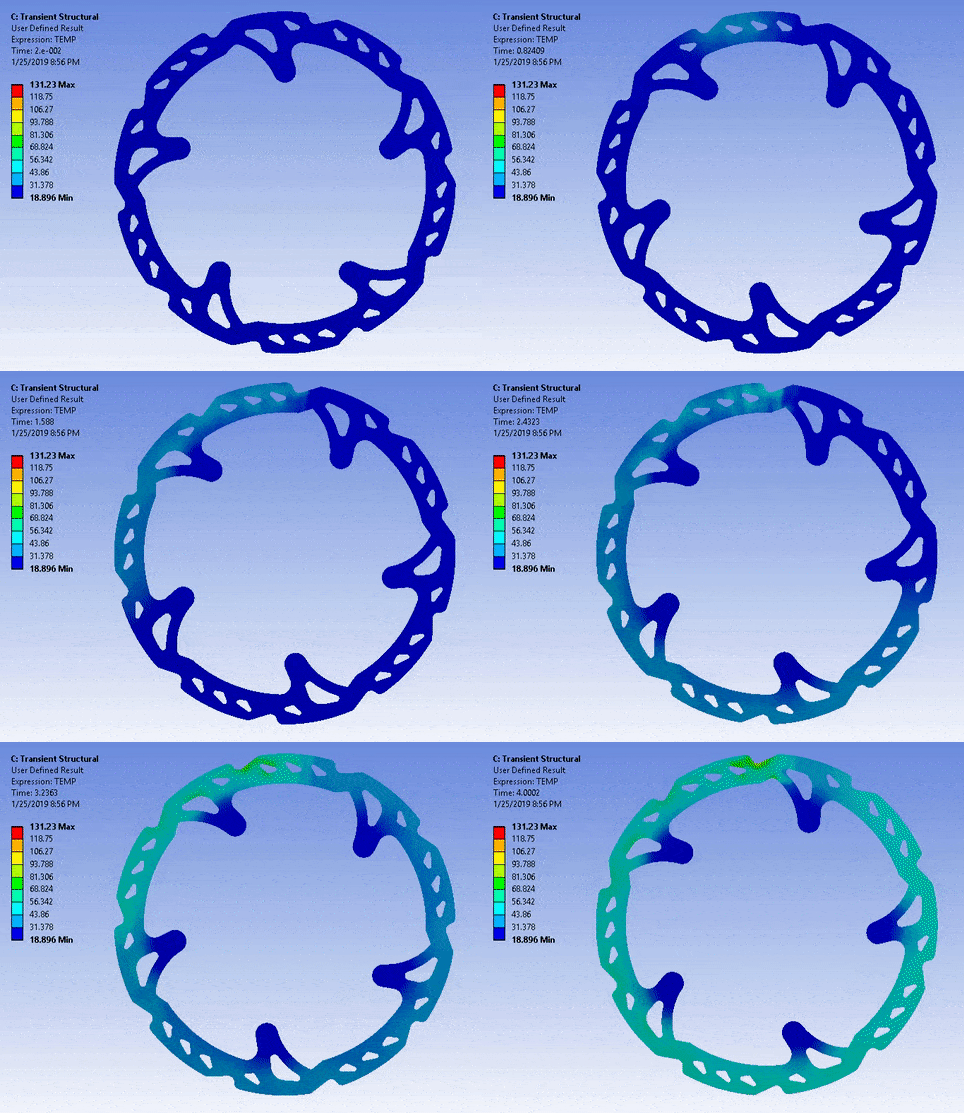

This was a fully coupled transient analysis performed in ANSYS using elements with structural and thermal degrees of freedom. The objective was to model the thermal processes that occur during the use of a mountain bike disc brake. Specifically, heat was generated using a frictional contact law at the pad/rotor interface. A convective boundary condition cooled the rotor as it rotated through ambient air.
Mountain bikers are always admonished to use brakes in short pulses, rather than leave brakes lightly applied. This strategy is purported to keep brake rotors cool. The objective of the project was to compare the maximum rotor temperature in both constant and pulsed braking scenarios. In both scenarios, identical work was done on the rotor, and therefore an identical amount of total heat was applied to the rotor. However, one scenario was comprised of the brake pad normal force being 3,000 N for 4 seconds. In the other scenario, a 6,000 N normal force was applied in 4 half-second pulses.
It was found that quick pulses of hard braking raised rotor temperature quickly compared to one long period of gentle braking. However, the quick temperature increase in the pulsed scenario was followed by a greater convective cooling heat flux with ambient air. This is due the increased temperature difference between rotor and air generated by the quick, hard brake pulses.
This was an interesting project as it combined a relatively straightforward transient structural analysis in ANSYS workbench with some snippets of APDL code to incorporate the thermal analysis.
 Anthony M LeBaron